Act on Cotaract Before it's too Late (5)

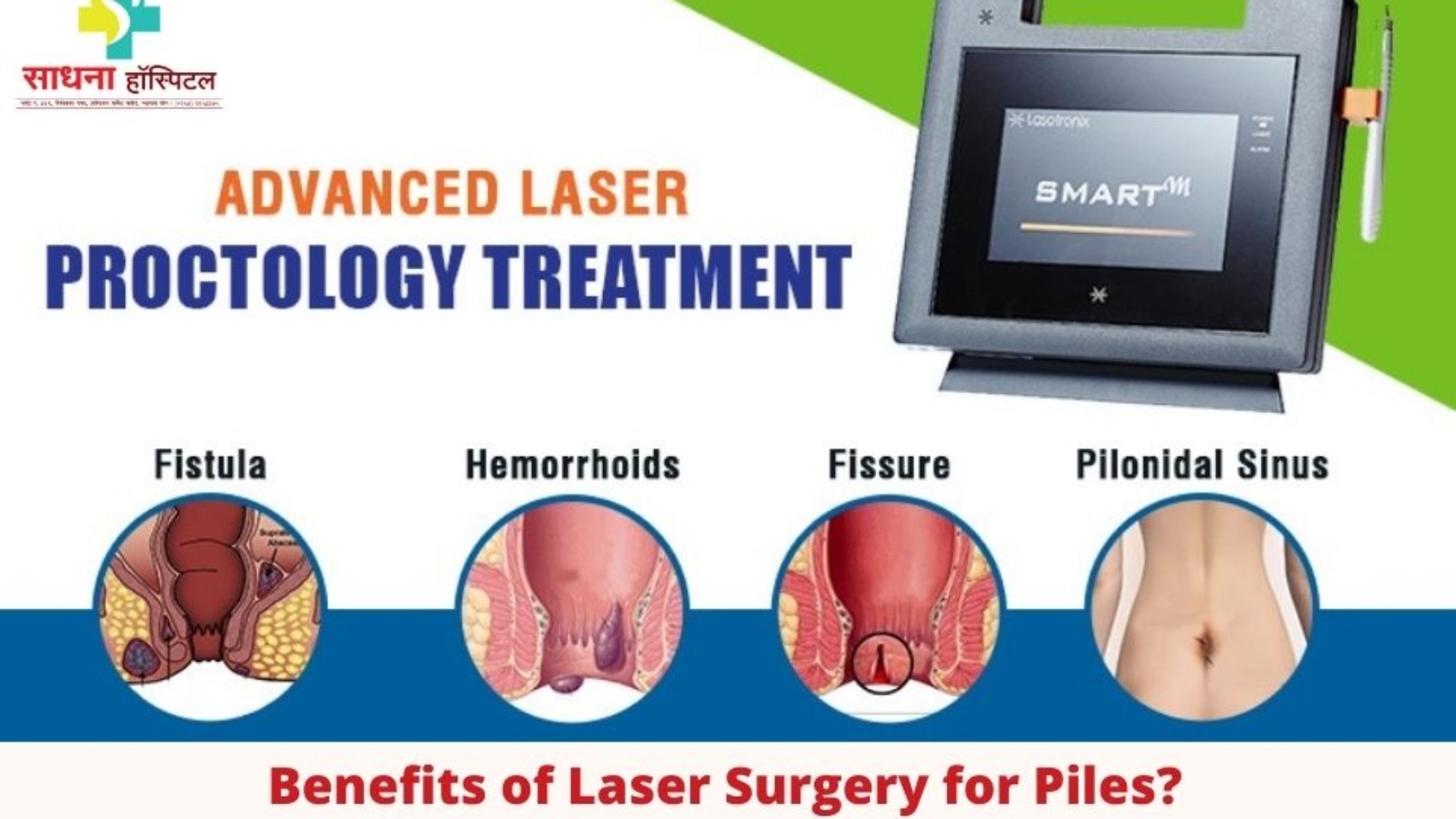
Benefits of Laser Surgery for Piles?

What is Piles ?

Hemorrhoids, also called Piles, are swollen veins developing around the anus or inside it. Internal hemorrhoids can be potentially dangerous and external hemorrhoids can cause excess pain, particularly because of the sensitivity of the area.

Laser Surgery for Piles

Laser surgery for piles is the preferred option for both physicians and patients. The procedure can be performed on an outpatient basis, which is always more convenient. With the help of a laser, the our surgeon can pinpoint the exact tissue that needs to be treated. The surrounding tissues are left undisturbed.

In the case of patients, laser surgery for piles is preferable since there is No bleeding involved and it is easier to recover quickly. The procedure is non-intrusive and doesn’t require any medication. The surgery involves little to no pain.

During the procedure, the laser is focused on the affected area and it seals off the small blood vessels and nerves. With the nerve endings closed, there is hardly any discomfort caused to the patients. Furthermore, laser hemorrhoid surgery is a highly successful procedure, which is one of the main reasons why it is preferred.

Benefits of treating piles with laser surgery

  • The patient feels much less pain as compared to other procedure
  • There is no need for hospitalization for the procedure. The patient can get discharged on the same day
  • In comparison to traditional surgical options, laser surgery is much safer
  • Since the blood vessels in the anal region are sealed off by the laser, minimum bleeding is caused during the procedure
  • Chances of any other medical complication arising are minimum
  • The surgeon has many options for effective utilization of the laser beam, thus improving the chances of success through the surgery
  • The surgeon’s task is much less complicated and risky
  • Aids in the fast healing of the wound
  • Since general anesthesia isn’t needed for the procedure, the recovery is much faster

With so many benefits, laser surgery is definitely an option worth considering in case of piles.
Act on Cotaract Before it's too Late (4)

Gall Bladder Stone Removal Surgery, Diagnosis & Causes

About Gall Bladder Stones :

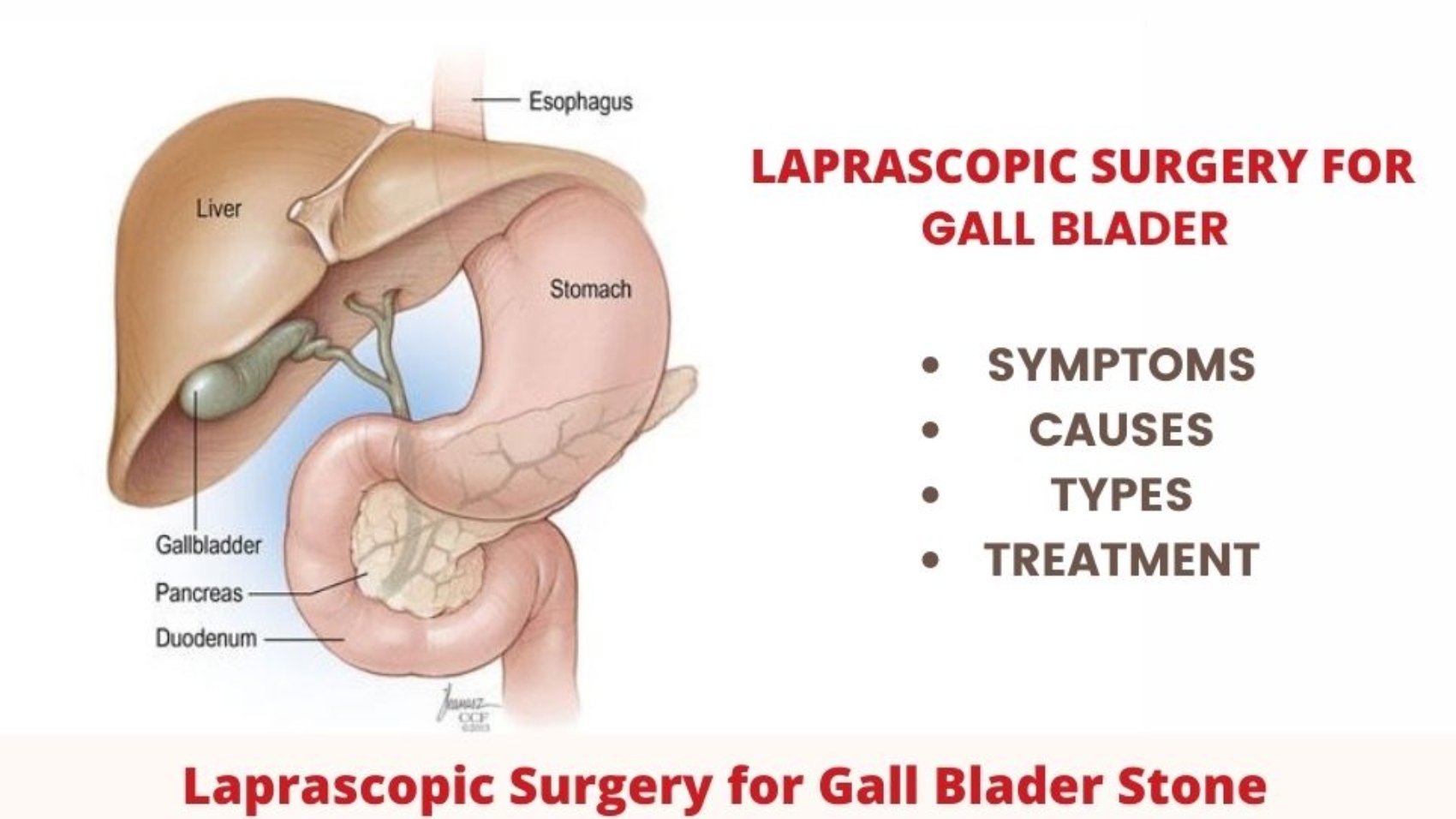
Gallbladder is a small, pear-shaped organ, located at the upper right part of the abdomen below the liver.

The role of the gall bladder is to store the yellow coloured liquid called bile juice that helps in proper digestion.

Whenever there is excessive cholesterol deposit, it gets hardened and forms Gallstones. These are of varying sizes ranging from the size of a grain to the size of a go

Types of Gall Bladder Stones :

There are basically Two Types of Gallstones :
 

  • Cholesterol stones: Usually yellow-green in color, they are the most common gallstones found. Excessive concentration of bile in gall bladder leads to formation of yellow cholesterol stones.
  • Pigment stones: Small and darker ones, these stones are formed of bilirubin. Bilirubin   comes from bile which is produced by the liver and gets stored in the gallbladder.

Gall Bladder Stone Symptoms :

In most cases (75%), gallbladder stones show no signs or symptoms.

Often, gallstones do not show any symptoms, but when it gets stuck in the duct, it can cause blockage. In that case, you can experience one or more of the following symptoms:

  • Sudden acute pain in the upper right side of the abdomen
  • Back pain between the shoulder blades
  • Pain in the right shoulder
  • Nausea/vomiting
  • Dark urine
  • Burping
  • Diarrhoea
  • Indigestion/acidity

How are Gallstones Treated?

Commonly, Gallstones require no treatment unless they cause severe symptoms like pain, and vomiting etc. Surgery is recommended in severe cases.

a.) Surgery :

  • Laparoscopic Gallbladder Removal : During this procedure, the surgeon will make 3-4 incisions in your abdomen. Through these incisions, a small, lighted device is inserted to carefully remove the gallbladder.  The patient isrelieved on the same day of the procedure if no further complication is seen.

b.) Nonsurgical Treatments :

  • Medication : Due to advanced surgical procedures using laparoscopic and robotic techniques, surgeries are a lot easier and successful these days. Still, if you are not a candidate for surgery due to certain medical complications, doctors may prescribe a few medications that help dissolve these gallstones. But, medications are not commonly recommended as they are not much effective in treating this problem and take years to show results.
Act on Cotaract Before it's too Late (2)

Making Sense of Hypertensive Retinopathy

What is hypertensive Retinopathy?

The retina is the tissue layer located in the back of your eye. This layer transforms light into nerve signals that are then sent to the brain for interpretation.

When your blood pressure is too high, the retina’s blood vessel walls may thicken. This may cause your blood vessels to become narrow, which then restricts blood from reaching the retina. In some cases, the retina becomes swollen.

Symptoms of hypertensive retinopathy

You probably won’t have any symptoms until the condition has progressed extensively. Possible signs and symptoms include:

  • reduced vision
  • eye swelling
  • bursting of a blood vessel
  • double vision accompanied by headaches

Get medical help immediately if your blood pressure is high and you suddenly have changes in your vision.

What causes Hypertensive Retinopathy?

Prolonged high blood pressure, or hypertension, is the main cause of HR. High blood pressure is a chronic problem in which the force of the blood against your arteries is too high.

The force is a result of the blood pumping out of the heart and into the arteries, as well as the force created as the heart rests between heartbeats.

When the blood moves through the body at a higher pressure, the tissue that makes up the arteries will begin to stretch and eventually become damaged. This leads to many problems over time.

HR generally occurs after your blood pressure has been consistently high over a prolonged period. Your blood pressure levels can be affected by:

  • a lack of physical activity
  • being overweight
  • eating too much salt
  • a stressful lifestyle

High blood pressure also runs in families.

Act on Cotaract Before it's too Late (1)

What is Cataract ? Symptoms, Causes, Treatments


Warning: Undefined array key "ids" in /home3/sadhavxy/public_html/wp-content/plugins/essential-grid/public/essential-grid.class.php on line 6001

Warning: Undefined array key 0 in /home3/sadhavxy/public_html/wp-content/plugins/essential-grid/public/essential-grid.class.php on line 6005

Warning: Trying to access array offset on null in /home3/sadhavxy/public_html/wp-content/plugins/essential-grid/public/essential-grid.class.php on line 6005

What is Cataract ?

The word “Cataract” is derived from the Greek word katarraktes which loosely translates to waterfall. It was believed that a congealed fluid from the brain had flowed in front of the lens of the eyes. Today, eye cataract is defined as the clouding of the lens of your eyes.

When proteins present in the eye form clumps, it muddles the vision with a cloudy, hazy outline. It gradually develops and

Symptoms of Cataract include

  • Cloudy/milky/foggy/blurry vision
  • Poor night vision
  • Seeing a halo (glare) around lights especially when looking at headlights in the night
  • Double vision in few cases in the affected eye
  • Seeing a fading in colours
  • Need for brighter reading light
  • Growing sensitivity to sunlight and bright lights
  • Frequent prescription changes for glasses

What causes Cataracts?

The major cause for cataract is age. Other than that, various factors can cause the formation of cataracts like:

  • Previous or untreated eye injury
  • Hypertension
  • Previous eye surgery
  • UV radiation
  • Long exposure to sunlight
  • Over usage of certain medications
  • Hormone replacement therapy

These Factors can increase the likelihood of developing Cataracts

  • Smoking
  • Obesity
  • Aging
  • Diabetes
  • High blood pressure
  • Steroid medication
  • Family History

Prevention

Cataract prevention can be done if proper care is taken. Some of them include:

  • Regular eye check-ups
  • Quitting smoking
  • Maintaining a healthy diet
  • Eating fruits and vegetables containing antioxidants
  • Wearing UV blocking sunglasses while going out in sunlight

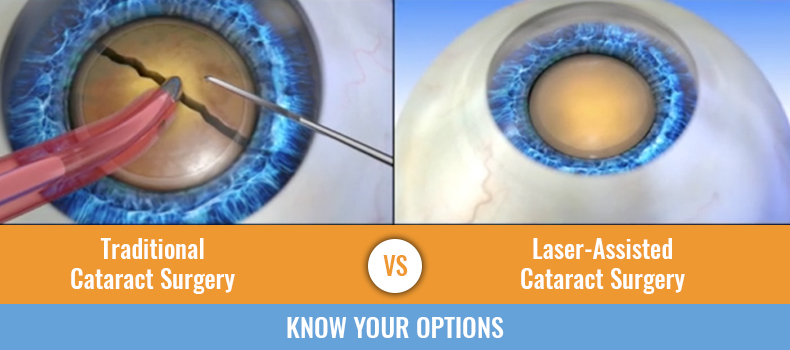
Treatments – Traditional Vs Laser Surgery